


Global Sumud Flotilla Finally Sails from Türkiye to Gaza, Defying Israeli Blockade
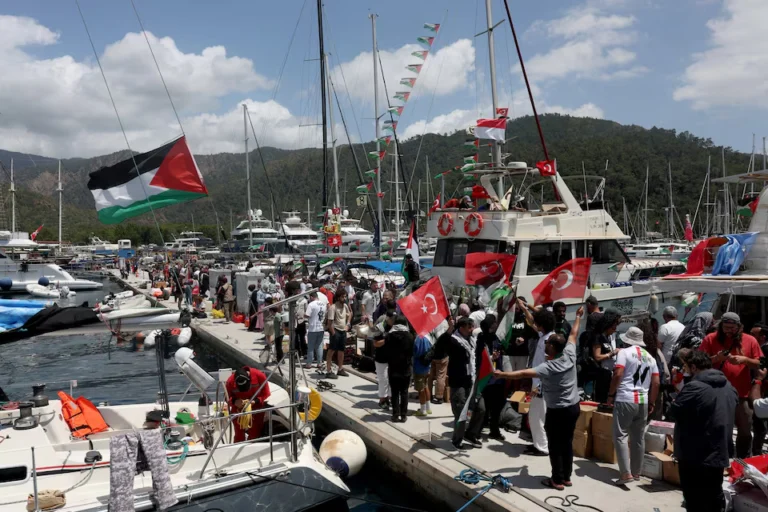
The mission is based on a strong legal principle that declares the current siege of Gaza not as a legitimate maritime blockade, but as an engine of genocide and a prohibited form of collective punishment. Photo: Reuters.
May 15, 2026 Hour: 4:59 pm
🔗 Comparte este artículo
The Global Sumud Flotilla embarked on its journey from Marmaris, Türkiye, on Thursday making its way towards Gaza.
The departure of the Global Sumud Flotilla marks the beginning of the final and most critical stage of its journey to Gaza from diplomatic preparations to active humanitarian intervention, asserting a practical exercise of international law in the face of what organizers describe as governmental inaction.
In anticipation of potential obstructions, the mission’s legal team released an exhaustive declaration that meticulously defines the legal standing of the voyage and outlines the consequences for any entity attempting to impede it.
RELATED: Israel Keeps Economic Siege on Palestine: PM Mustafa
This public statement is a testament to the meticulous planning and the firm legal basis underpinning the flotilla’s operations, emphasizing its adherence to established international legal principles. It underscores the organization’s commitment to protecting its participants and ensuring the successful delivery of aid under challenging circumstances, advocating for justice and accountability.
The mission’s primary objective is to establish a vital humanitarian corridor and directly challenge Israel’s illegal siege on the Palestinian people.
Legal Challenge Asserted
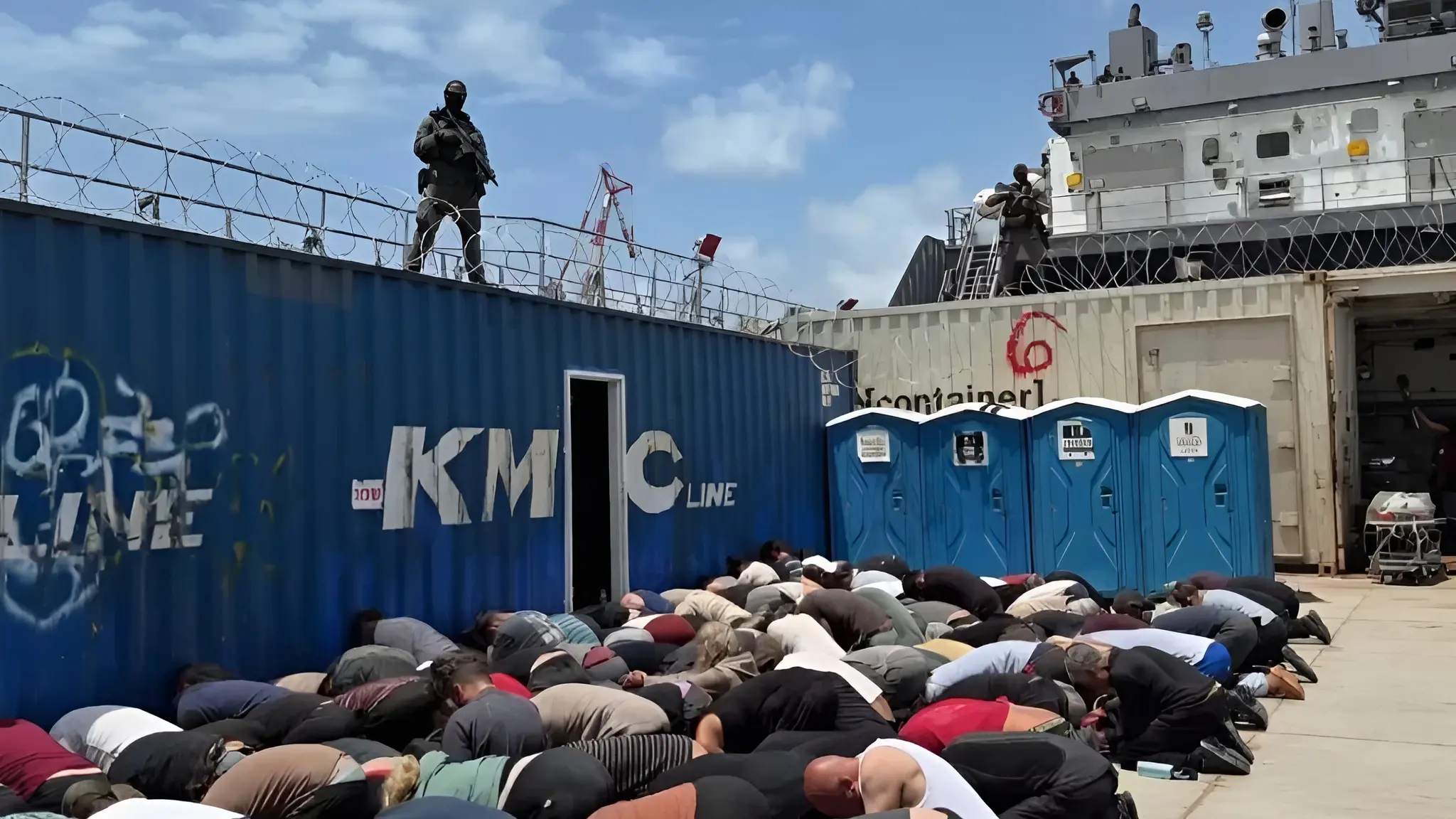
By denying essential items for the survival of the civilian population, the siege on Gaza fundamentally lacks legitimate enforcement powers against civilian vessels. Consequently, the Global Sumud Flotilla firmly asserts its inalienable right to humanitarian passage and the right of its participants to be free from kidnapping, arbitrary detention, or violent interception in international waters.
This undertaking is presented as a crucial, tangible exercise of international law, directly confronting what organizers perceive as a void in governmental action and responsibility. The mission explicitly argues that denying basic necessities transforms the blockade into an illicit act, devoid of any legal justification under contemporary international humanitarian law.
To ensure the mission’s comprehensive protection, a strategic legal framework has been meticulously implemented, predicated on three foundational pillars: prevention, documentation and prosecution. This proactive initiative commenced with the formal dispatch of notifications to relevant flag states, states of origin and port states.
The comprehensive legal strategy aims to create a robust deterrent against interference while simultaneously laying the groundwork for accountability should any violations occur during the mission’s progress.
Accountability Framework
Simultaneously, a robust documentation apparatus has been established to meticulously record every instance of interference encountered by the Flotilla. This encompasses a broad spectrum of potential obstructions, ranging from the blocking of communications to direct physical boarding.
The evidence gathered through this rigorous process will be immediately utilized in international tribunals, ensuring that every violation is formally recorded and preserved for future criminal proceedings. This proactive approach to evidence collection is critical for securing justice and holding perpetrators accountable, reinforcing the legal ramifications of any actions taken against the humanitarian mission.
Legal experts contend that these established frameworks cannot be co-opted or utilized as colonial guardians to transform the legitimate legal right to humanitarian access into a mere permit regime administered by foreign powers. Such an approach, they argue, would serve only to perpetuate the ongoing denial of Palestinian self-determination, undermining fundamental principles of sovereignty and Human Rights.
In response to these concerns, there is a growing demand for United Nations member states to formally request an advisory opinion from the International Court of Justice (ICJ). The objective is to clarify whether the Security Council can legally endorse a regime that effectively displaces Palestinian self-determination. This legal clarification is seen as essential for upholding the integrity of international law and ensuring that powerful states do not override the fundamental rights of occupied populations.
Active Judicial Pursuit
The legal repercussions for interference with the Flotilla are already manifesting across multiple jurisdictions. Criminal proceedings have been initiated in Spain, Italy and Türkiye, where a total of 37 high-ranking officials already face arrest warrants. These active judicial pursuits signal a firm commitment to holding individuals accountable for actions that obstruct humanitarian efforts and violate international law.
The legal team’s proactive approach demonstrates that the mission is not merely a symbolic gesture but a carefully planned operation with serious legal backing, prepared to challenge any obstruction through judicial means. This aggressive legal strategy aims to set a precedent for future humanitarian missions and reinforce the principle that violations of international law will not go unpunished.
Author: Laura V. Mor
Source: Global Sumud Flotilla